..... Greatest Trustable Truth Revolution Accredited Nature-Connecting Holistic Degree Course Training Online
"Our suicidal war with nature makes us face devastating new heights of global heating and mental illness, new lows of ecological degradation and new setbacks in our work towards globally equitable, inclusive and sustainable development relationships. To put it simply, the state of the planet and our lives is broken." Making peace with Nature, around, in and as us, is the defining task of the 21st century. It is time to pull the green switch that makes peace and wellness."
- Antonio Gutteres, UN Secretary General (extended)
The "Pristine Truth" of this page's "Natureness" is the green switch that lets us make peace with Nature as it is doing here.
Visit it to reap its benefits as you stop our ecocide.
This instant, heartfelt and scientifically, the life of your body mind and spirt reasonably thinks, senses, feels and knows that you are reading theses words and that they are undeniably true because they a doing what they say they do.
You additionally know that Nature and you are growing older together and that this remains the same as when you were conceived and born. Any words, like these right now, that validate this fact are pristine true because they support nature's wordless life in balance.
Any other words are ecocide lies because, human-made, they are artifacts that substitute for authentic life and there is no good substitute for it.
Ecocide it the criminal mass destruction of the natural world, severe and widespread done by humanity.
Our nature-disconnecting words are the prime source of our ecocide and we spend all but 12 hours of our entire lives using them, out of tune with Nature's self-correcting essence. This is simply because our words omit telling us not to use or trust Nature's AI, the only known cure for our ecocide madness.
Nature's AI is the core of the green switch.
We can't solve our problems when we are limited to using the ecocide word distortions that cause them. Just as sure as you are reading these words, Nature's AI let's you think and grow outside our ecocide word box prison.
The How and Why of Nature's Essence
and Reducing Earth's Misery
Whenever the pristine truth of our essence connects with Nature's self-correcting essence (Natureness) it therapeutically transforms our traumatic war with Nature, that rages in and around us, into personal, social and environmental well being.
SUMMARY
This page rewards those who want to use, learn and/or teach therapeutic nature-reconnecting activities. They increase the joy of person/planet wellness by making peace with Nature in and around us.
It provides a remedy for how we educate and counsel oursleves to create today's growing ecocide catastrophe and "Earth Overshoot" excessiveness.
Since 1974, because our society too often abuses our "Natureness (natural essence) our undeclared prejudice and war against Nature has injuriously produced a 52% loss of wildlife and 45% increase in social climates that create mental illness, obesity, climate change, oceanic oxygen depletion, loneliness, atmospheric carbon, mass shootings and excessive stress.
The war's trauma has painfully increased corruption, child abuse, unhappiness, mistrust, unfairness, expensive health care, political and economic extremes, our destructive cravings, dependencies, addictions and many associated disorders.
Those of us who resist the war are considered allies of Nature and are unjustly treated as lesser beings.
Earth and Humanity in 2024 A.D. are bankrupt. We have lost 75% of our natural abiility to recover from this ecocide assault, and counting.
Who are we? Although we may deny or not notice it, if all populations were human life populations, our abuse of what are now considered "wildlife populations" would be examples of war, prejudice, rape, murder, enslavement, trauma, evisceration, stress and torture.
We need to hook up with another planet four times the size of Earth to replace it and stop our criminal ecocide.
It’s an undeniable fact that you love to live and are reading these words here and now. That's a “Pristine Truth.” When you enact its value you create a unique, therapeutic and beneficial moment of trustable anti-ecocide unity.
Pristine Truth moments like this one are precisely what our broken world and lives are missing and desperately need in and around us. The absence of Pristine Truth is the source of the excessive emptiness, discontents and violence we create and suffer.
Pristine Truth is an unforgiving organic, 54-sense science that is reasonable, repeatable and trustable. We’re using and being it this instant. What else can you do or trust that doesn’t leave you feeling uneasy and unconfident?
All that Project NatureConnect has accomplished stems from its founder discovering hs Pristine Truth when he was 6 years old and he continued to live it. You can do the same starting this instant via this website because it grows and strengthens Pristine Truth moment by moment.
The only reason it won't do this is because your authorities have taught your “psyche" not to believe or trust your Pristine Truth. Isn’t that catastrophic short circuit ecocide?
What you want in any moment grows the next moment. If you don't want increased ecoide in this moment, then you want to decrease ecocide via Nature's AI Navigator in every additional moment.
Adding Natureness to the essence of any activity or relationship, by 550% improves it as it helps stop the war and increases well-being.
STRAIGHT FROM THE SOURCE
Hello and welcome. I'm Mike Cohen, the founder of Project NatureConnect's eco-arts science and Nature's AI.
In 1965, while backpacking in the Grand Canyon Wilderness I wondered if Planet Earth was alive and what was the difference between its life and mine so I lightheartedly asked it that question directly, knowing the obvious answer. Of course it did not answer because it cannot use words and speak.
However, in time an undeniable truth from that question became apparant, The difference was and remains that I could speak words and Nature, the life of the wilderness, couldn't. In addition, if Nature's life died, so would mine so Nature must be alive.
Accidently, I had created and learned from a Pristine Truth Natureness and Spacetiming moment that let Nature teach. The truth of its essence had touched mine.
Your turn. Be scientific. Ask any part of a natural area the same questions. Note that it can't speak, read or write, it's life is "dumb" and we treat it accordingly because it can't tell us to stop.
In your heart of hearts you know that if it could speak it would, because that heart is it.
Nature's life is missing the 3 R's we enjoy and this puts it at a great risk, agony and disaadvantage to our excessively conquering stories and acts.
By 1974 we hurtfully overused and "bankrupted' the life of our planet into being resource-deficient and increasingly non-recuperative.
Today Earth's life is increasingly in debt because we don't add Natureness, the scientific core of our soul, to our education and counseling procedures.
Over the past 60 years I have created and applied "Natureness" as a hands-on tool that let's Nature's life speak and teach its 54-sense, Big Bang truth to anyone, as it did with me in the Grand Canyon.
For example, since, scientifically, everything, everywhere is connected and happens together as our space-time Universe grows, all things are in tune with this sentence: "It is an undeniable truth, an absolute fact that you are reading these words here and now."
The trustable core of this fact is that its words accurately describe what it is doing.
HOWEVER, it is also ecocide because without Nature's AI, our words disconnect us from Nature's life.
As you can see, I've simply applied the powerful essence of this Natureness reality to any situation.
“If the answer is simple, God is speaking”
- Albert Einstein
Natureness, hands-on, in natural areas, backyard or back country, helps us unify and heal the broken world our excessively nature-disconnected stories and acts have created.
Below, in words, are what my wordless time in natural areas has taught, and still teachs me, and can teach you to teach others.
Since forever, as now, Nature is its wordless attraction/love to begin life and justifiably love its dance into being.
With respect to the totality of life, the life of Nature, Earth and Humanity is identical.
- Nature loves to live without word-stories and so does Humanity.
- Humanity also loves to live with its word-stories.
- At any moment we can choose words that either love to live or that disconnect us from that love.
- When our word-story distortions stressfully disconnect us from the essence of Nature's wordless self-correcting love-to-live (Natureness), we and Nature suffer painful ecocide deterioration from the "Earth Misery" that we create.
- This depreciation is the basic problem that Psychology studies.
It has yet to acknowledge its source, that our words excessively disconnect us from Nature's balanced and beautiful love to grow life, around, in and as us. That love is our wordless, felt sense, love to live.
Your choice this instant. Do you think that you have you been prejudiced to war against Nature as is "normal" ?
Since if the life of Nature/Earth dies, we die, we can logically conclude that Nature/Earth must be alive.
If Earth's life is eviscerated, abused or sickend by our word-stories, what kind of illness in our life makes us think that we are well since we are it?
We increasingly suffer the abusive climates created by our person/planet separate-life insanity that lets 99.9% of our lifetime be out of tune with Nature's self-correcting essence (Natureness). This injustice deteriorates our lives and loves and are making our world break apart.
In 1984, I personally informed the director of United Nations Environmental Protection about the war and its Natureness solution. Like many others, he and they have never responded.
Do you think this tragic situation makes you feel that you don't deserve or value good feelings you can get from a natural area or Natureness? That a drug or new toy is better? That's an ecocide lie.
A United Nations RED ALERT now says this solastalgia disease we suffer is a prejudcial war on Nature that denies its own existence along with its 54 felt-sense Climate Therapy Natureness, a natural area, green switch remedy for today's climate crises atrocities.
- Michael J. Cohen, Ed.D., Ph.D.
(360) 378-6313
Life without Pristine Truth: Pirating our Planet
April 22, 2000
EARTH DAY PLUS THIRTY, AS SEEN BY THE EARTH
By Donella Meadows, adjunct professor at Dartmouth College. Used with permission
If, in the thirty Earth Day celebrations we have held since 1970, (now fifty-four in 2024), the human population and economy have become any more respectful of the Earth, the Earth hasn't noticed.
The planet is not impressed by fancy speeches. Leonardo DiCaprio interviewing Bill Clinton about global warming is not an Earth-shaking event. The Earth has no way of registering good intentions or future inventions or high hopes. It doesn't even pay attention to dollars, which are, from a planet's point of view, just a charming human invention. Planets measure only physical things-energy and materials and their flows into and out of the changing populations of living creatures.
What the life of Earth sees is that on the first Earth Day in 1970 there were 3.7 billion of those hyperactive critters called humans, and now there are over 6 billion. (2024 update, 8.2 billion)
Back in 1970 those humans drew from the Earth's crust 46 million barrels of oil every day-now they draw 78 million. (2024 update, 100 million as is the average 25% increase in all catagories below)
Natural gas extraction has nearly tripled in thirty years, from 34 trillion cubic feet per year to 95 trillion. We mined 2.2 billion metric tons in 1970; this year we'll mine about 3.8 billion. The planet feels this fossil fuel use in many ways, as the fuels are extracted (and spilled) and shipped (and spilled) and refined (generating toxics) and burned into numerous pollutants, including carbon dioxide, which traps outgoing energy and warms things up. Despite global conferences and brave promises, what the Earth notices is that human carbon emissions have increased from 3.9 million metric tons in 1970 to an estimated 6.4 million this year, 2000, and no end to the increase is in sight.
You would think that an unimaginably huge thing like a planet would not notice the one degree (Fahrenheit) warming it has experienced since 1970. But on the scale of a whole planet, one degree is a big deal, especially since it is not spread evenly. The poles have warmed more than the equator, the winters more than the summers, the nights more than the days. That means that temperature DIFFERENCES from one place to another have been changing much more than the average temperature has changed. Temperature differences are what make winds blow, rains rain, ocean currents flow.
All creatures, including humans, are exquisitely attuned to the weather. All creatures, including us, are noticing weather weirdness and trying to adjust, by moving, by fruiting earlier or migrating later, by building up whatever protections are possible against flood and drought. The Earth is reacting to weather changes too, shrinking glaciers, splitting off nation-sized chunks of Antarctic ice sheet, enhancing the cycles we call El Nino and La Nina.
"Earth Day, Shmearth Day," the planet must be thinking as its fever mounts. "Are you folks ever going to take me seriously?"
Since the first Earth Day our global vehicle population has swelled from 246 to 730 million. Air traffic has gone up by a factor of six. The rate at which we grind up trees to make paper has doubled (to 200 million metric tons per year). We coax from the soil, with the help of strange chemicals, 2.25 times as much wheat, 2.5 times as much corn, 2.2 times as much rice, almost twice as much sugar, almost four times as many soybeans as we did thirty years ago. We pull from the oceans almost twice as much fish.
With the fish we can see clearly how the planet behaves, when we push it too far. It does not feel sorry for us; it just follows its own rules. Fish become harder and harder to find. If they are caught before they're old enough to reproduce, if their nursery habitat is destroyed, if we scoop up not only the cod, but the capelin upon which the cod feeds, the fish may never come back. The Earth does not care that we didn't mean it, that we promise not to do it again, that we make nice gestures every Earth Day.
We have among us die-hard optimists who will berate me for not reporting the good news since the first Earth Day. There is plenty of it, but it is mostly measured in human terms, not Earth terms. Average human life expectancy has risen since 1970 from 58 to 66 years. Gross world product has more than doubled, from 16 to 39 trillion dollars. Recycling has increased, but so has trash generation, so the Earth receives more garbage than ever before. Wind and solar power generation have soared, but so have coal-fired, gas-fired and nuclear generation.
In human terms there has been breathtaking progress. In 1970 there weren't any cell phones or video players. There was no Internet; there were no dot-coms. Nor was anyone infected with AIDS, of course, nor did we have to worry about genetic engineering. Global spending on advertising was only one-third of what it is now (in inflation-corrected dollars). Third-World debt was one-eighth of what it is now.
Whether you call any of that progress, it is all beneath the notice of the Earth. What the Earth sees is that its species are vanishing at a rate it hasn't seen in 65 million years. That 40 percent of its agricultural soils have been degraded. That half its forests have disappeared and half its wetlands have been filled or drained, and that despite Earth Day, all these trends are accelerating.
All these increases come with devastating human, resource and monetary costs, along with misery factors that keep growing.
Earth Day is beginning to remind me of Mother's Day, a commercial occasion upon which you buy flowers for the person who, every other day of the year, cleans up after you. Guilt-assuaging. Trivializing. Actually dangerous. All mothers have their breaking points. Mother Earth does not soften hers with patience or forgiveness or sentimentality.
The wholeness of our earth mother dances in and around us. What we do to it, we do to our individual and collective body, mind and spirit.Select here for a tool that helps us learn and teach how to supportively think in balance with natural systems.
An Overview from B.F. Skinner, 1971
Edited from Beyond Freedom and Dignity by B.F. Skinner (Skinner, 1971)
"In trying to solve the terrifying problems that face us in the world today, we naturally turn to the things we do best. We play from strength, and our strength is science and technology.
- To contain a population explosion we look for better methods of birth control.
- To decrease mental illness we seek more powerful drugs and therapies
- Threatened by a nuclear holocaust, we build bigger deterrent forces and anti-ballistic-missile systems.
- We try to stave off world famine with new foods and better ways of growing them.
- Improved sanitation and medicine will, we hope, control disease, better housing and transportation will solve the problems of the ghettos,
- New ways of reducing or disposing of waste will stop the pollution of the environment.
- We can point to remarkable achievements in all these fields, and it is not surprising that we should try to extend them. But things grow steadily worse and it is disheartening to find that our dependent attachment to technology itself is increasingly at fault.
Sanitation and medicine have made the problems of population more acute,
- War has acquired a new horror with the invention of nuclear weapons,
- The affluent pursuit of happiness is largely responsible for pollution.
- The excessive use of drugs has addicted us to them.
- The non-organic fulfillment of our wants produces environmental deterioration.
The application of the physical and biological sciences alone will not solve our problems because the solutions lie in another field. What we need is a technology of behavior. We could solve our problems quickly enough if we could adjust the growth and destructive impact of the world's population as precisely as we adjust the course of a spaceship.
Select here for a tool that helps us learn and teach how to supportively think in balance with natural systems.
Reminder: the point source of this unfair dilemma has been identified and a practical remedy for it is readily available.
Nature Hallucinations
by Barbara Kingsolver (extended)
Most of our populace and all of our leaders deny that they are not reacting appropriately to an addictive, mass, hallucinatory, prejudiced against Nature's-wordless-love fantasy in which:
* the megatons of waste that we dump in our rivers and bays are not poisoning the water or our body, mind and spirit.
* the hydrocarbons we pump into the air are not changing the climate of the world, our natural security, or deteriorating our health.
* over-fishing is not depleting the oceans, over-consumption does not hurt the environment or our health.
* living in estranged, story-based ways that disconnect us from the balance found in nature's grace and self-correcting powers does not reduce our resilience or result in our dysfunctions
* fossil fuels will never run out; the loss due to our fossilized thinking that demeans nature, in and around us, does not motivate our excessiveness, abusiveness and greed.
* our 54 natural sensitivities and sensibilities are not part of the way natural systems work; disconnecting them from sensory literacy about nature does not make us excessively want so that we feel we never have enough so we never are enough.
* wars that kill masses of civilians are an appropriate way to keep our hands on what's left and the economy rolling; wars against people do not result from an undeclared war we wage against nature and the natural, in and around us.
* we are not desperately overdrawn at the environmental or emotional bank; we are not conditioned to be prejudiced against nature or against the free, renewing ways of the life of the web-of-life.
* sensory activities that connect our body, mind and spirit to nature's healing powers don't help us increase our well being; our separation-from-nature wanting, excessiveness and greed do not place our natural resources, economy or well-being at-risk.
* and really, although by the age of seven our kids bond to this mass hallucination, addict to questionable technologies and need to be drugged, they are all right.
Reminder: the point source of this unfair dilemma has been identified and a practical remedy for it is readily available.
READ:
Excessive Science: Drill, Grill and Chill
By MAUREEN DOWD
The Human Conditon and Unjust Science
If we could shrink the earth's population to a village of precisely 100 people, with all the existing human ratios remaining the same, it would look something like the following.
There would be:
57 Asians
21 Europeans
14 from the Western Hemisphere, both north and south
8 would be Africans
52 would be female
48 would be male
70 would be non-white
30 would be white
70 would be non-Christian
30 would be Christian
89 would be heterosexual
11 would be homosexual
6 people would possess 59% of the entire world's wealth and all 6 would be from the United States.
80 would live in substandard housing
70 would be unable to read
50 would suffer from malnutrition
(ONE)1 would be near death;
(ONE)1 would be near birth;
(ONE)1 would have a college education;
(ONE)1 would own a computer.
If you have food in the refrigerator, clothes on your back, a roof overhead and a place to sleep, you are richer than 75% of this world.
If you woke up this morning with more health than illness, you are more blessed than the million who will not survive this week.
If you have money in the bank, in your wallet, and spare change in a dish someplace, you are among the top 8% of the world's wealthy.
If you can attend a church meeting without fear of harassment, arrest, torture, or death, you are more blessed than three billion people in the world.
If you have never experienced the danger of battle, the loneliness of imprisonment, the agony of torture, or the pangs of starvation, you are ahead of 500 million people in the world.
Reminder: the point source of this unfair Nature's-wordless-love dilemma has been identified and a practical remedy for it is readily available. Select here
Since 1950 we have known that what happens to our living planet simultaneously happens to us. That's the source of our anxiety discontents and unbalance and our education hides how to remedy it.
Why not come out of denial?
Call (360)-378-6313
It makes sense that the life of the Universe/Nature/Earth loves to live its balance and beauty. However, knowing this seldom stops our abuse of it because how we learn to think and act is habitual or addictive. Our leaders can't help us change because they have the same habits and addictions.
The methods and materials of Project NatureConnect empower us to scientifically create Natureness sensory moments that let the self-correcting life of Universe/Nature/Earth consciously connect our fifty-four senses with Nature's-wordless-love wisdom of its perfection. Our happy application of this earth-shaking revolutionary wisdom empowers us to transform our abuse and addictions into more sensible ways of thinking feeling and relating as we help others do the same. This offers any caring individual an exciting livelihood or hobby.
Scientifically, since it was born, as Nature's life of the Universe grows its own space and time to live in, all things, including us, exist and grow together as do all the different parts of our body. We are all attached and unified as the oneness of a "universal organism" since, before forever, Nature began.
This explains how our thoughts, feelings and relationships can sense that Nature is its wordless attraction (love) to begin the life of the universe/earth/us.
Everything, including us, is the life Nature's essence loves into being and dances.
It is self-evident, 54-sense, existential that the essence of anything, including us, is the nameless, spacetime, "tree of life" that is called Nature, from "natal", to be born.
The illustration in this download portrays the Universe's growth since it was born 13.7 billion years ago.
Read more about this remedy for our ecocide Download PDF
Climate Therapy, Natureness and Earth Misery
Synopsis
Earth Misery Day was July 29, 2022.
On this day, excessively unbalanced human activities used up the resources for Nature's-wordless-love life of our Planet and us for the rest of the year.
This occurred while in natural areas our 54 natural senses make sense when we include them in how we think and relate.
This reverses Earth's and our misery by making 54-sense peace with Nature, around, in and as us.
Project NatureConnect enables us to accomplish the above when we know the greatest truth in our life that we can trust and devoid of Natureness, it is not Nature, God, Love or Honesty since, along with all the knowledge in the world, they create today's dilemmas.
Do you know what your greatest trustable truth is? Discover and explore its Natureness here.
In ten minutes learn free activities whose eco-arts and science gives you joy and well-being by enabling your Natureness to reduce Earth Misery. Optionally get certified or a degree in applying this sensory tool.
Take a giant step beyond shoulder shrugging "Nothing I can do about it" You can easily add it to every relationship and help others do the same.
Earth Misery Day has increased yearly to reach today's emergency level since 1974 when we first entered our global deficit.
This tragedy is no secret. It was scientifically predicted and published in bestselling books in 1949 about Our Plundered Planet and our Road to Survival. it violates our personal and international rights to life.
In every level and moment of our existence we personally and collectively sense, feel and react to our life-support loss due to our prejudiced against Nature Earth Misery. It deteriorates our planet's life and biodiversity.
Earth Misery is caused by our prejudicial war on wordless Nature and the traumatic stress it produces in and around us. Its uncontrolled growth is a cancer that invasively deteriorates our naturally balanced relationships, around and as us, so we become "ecozombies."
12/02/20 News Media Internationally: UN Secretary General Antonio Guterres issued a searing indictment of humanity's suicidal "war" on the environment Wednesday, in a speech on the state of the planet in which he urged everyone to prioritize "making peace with nature."
If you asked Nature about us do you think it might say we are lying, thieving pirates that, for profit, are stealing its "resources/metabolism" from our planet and each other?
2021 Alarm: Earth Misery Climates remain on track to collapse our person/planet world by 2040
Our Nature's-wordless-love disconnection misleads us to believe we can recover from the abuse and disorders of our life while, without using the 54-sense, Natureness antidote for them, our every excessively nature-disconnected, word, thought and relationship continues to increase our hurt, including our efforts for sustainability.
This prejudice against nature illegally deteriorates, rather than restores the Natureness of our planet's life that is also our life.
This is because Earth is the supportive but finite natural world resource for our physical and emotional well-being.
Why wouldn't you want to apply the powerful fifty-four sense Climate Therapy remedy for the root source of our unbalanced foundations that produce our corrupt, Earth Misery Climates Day suffering, in and around us?
Who dares to hear or support the remedy's reasonable Natureness voice shouting "EARTH'S LIFE MATTERS" Our deterioration of Nature's-wordless-love is unjust to all ways of life. Fortunately our Natureness remedies this.
"What is the use of a house if you haven't got a tolerable planet to put it on?"
- Henry David Thoreau"Our every thought, feeling and relationship is built on information that our 54 natural senses register and convey when we don't omit them.
When these self-correcting Natureness senses are deadened, warped or injured, so is our sensibility and sensitivity. That limits our reasonableness, welfare and happiness. We become Earth Misery cancers, soldiers or pirates.
Objective thinking that includes each of our 54 senses as a fact of life is the organic Natureness of Climate Therapy GreenWave-54 phenomenon. It is a heartfelt, nature-connected, whole life arts and science that regenerates Nature's-wordless-love, life and health of Earth/us as fiduciaries."
Climate Therapy enables us to think like Nature's wordless, self-correcting ways operate in/as our body, mind and spirit. They, moment-by-moment, include our cooperation and peace genetics/genesis that we inherit from our ancestor's millions of years of life living in unified balance with Nature. (Neanderthal, Aboriginal, Sentinal Islander).
Do you think you want to ask yourself, "How misled or isolated do I self-abuse choose to be?"
What's not to like here? Call me, 360-378-6313. Climate Therapy by 550% can increase the effectivness and decrease the expenses to produce wellness and peace by
- health and life insurance companies,
- public health, safety and welfare offices,
- evidence based therapy, education, conflict resolution, environmental, spiritual, medical and recovery programs
- government agencies for Defense, Education, Environmental Protection, Welfare and Homeland Security.
"It has become appallingly obvious that our technology has exceeded our humanity."
- Albert Einstein
NEWS: July 1, 2016. Because, since 1986, we have been reducing Chloroflurocarbon particles that we placed in the atmosphere, the Ozone hole is beginning to recover from the damage inflicted by these particles. They were identified as the root source of the hole and then we sensibly limited them so the life of Earth's self-correcting powers could once again operate and, with respect to Ozone, sustain our planet's well-being.
Get real. If you shoot a hole in the roof of your house, when you stop shooting the hole does not repair itself. This is because the house is not a living thing. Our planet is.
Studies show that the same root source Ozone recovery process works with respect to the injuries and abuse we inflict on our Nature's-wordless-love planetary and personal life. Climate Therapy and GreenWave Unified Field relationships help us remove the point source of these wounds we suffer. Their source is our excessive and unreasonable, 54-sense indoctrination, attachments or addictions to nature-injurious stories and artifacts.
Simply stated, without our great trustable truth we are unduly prejudiced against Nature's-wordless-love and we deny it.
The Natureness remedy that we overlook is to create GreenWave-54 Nature's-wordless-love connecting moments in natural areas that let the life of Earth's self-correcting ways come into play and teach us what we need to know through the Natureness of our 54 natural senses and 24 prime facts. Friendly familiarity or love are the best remedy for prejudice.
In Natural areas, Natureness education, counseling and healing with the natural world helps our stories and senses detach from our nature-deteriorating information and hurtful experiences.
We replace them with reasonable satisfactions and health by genuinely connecting ourselves with the balanced organics of nature's healing ways in natural areas while supporting them.
This is self-evident indisputable to anybody who has naturally had restorative experiences in a natural area.
We now daily suffer deterioration of our personal, social and environmental life relationships due to a loss of support and balance from the restorative, Nature's-wordless-love life-ways of our planet. This loss occurs during 45 seconds of each minute that we live. Although it stresses and hurts us, we consider it normal so we think that we don't need help.
"Life's a bitch and then you die" is a form of madness because Natureness instant betterment is always available and free. As aforementioned, we suffer because we indoctrinate ourselves to ignore this profound quality of Nature's-wordless-love in order to excessively exploit it for profit and prestige gratifications.
As aforementioned, although we may deny or not notice it, if all populations were human life populations, our abuse of what are now considered "wildlife populations" would be examples of war, prejudice, rape, murder, enslavement, trauma, evisceration, stress and torture.
As a remedy, invoking our Natureness would be a natural attraction arbitration between the conflicting states of our nature-exploitive ways and the balanced life of the natural world's wordless relationships in and around us.
While a solution from a Maverick Genius helps us address our denial of the cause and remedy for this crazyness, our denial seldom lets us apply the remedy.
Earth Overshoot Day marks the date each year when humanity exhausts Nature's physical resources in the life of Planet Earth . Since all things are connected, it also signifies that all year long, personally and planet-wise, we experience and sense this natural resource deficiency. It as a feeling of emptiness or isolation, a lack of trust and Nature's-wordless-love, an unexplainable, discomforting void in our body, mind, spirit and environmental security that seems "normal." This is a symptom of Nature Deficit Disorder and this day must be also identified as Earth Misery Day.
Because our 54 senses are sensible, when we live bankrupt in our unjust planetary-life corruption it is reasonable for our senses to feelingly register and signal to us the loss of our very special, Nature's-wordless-love and support from the life of our planet. For example, folks felt happier and more secure while sailing on the Titanic before an iceberg ruptured it than after they knew the rupture had occurred and that it might sink. Even a change in the weather affects how we feel.
The source of our Earth resource deficit and misery is that we live extremely nature-disconnected lives.
On average, our lives last 620,000 hours and less that 12 of them are in tune with Nature's-wordless-love life of our planet.
Our estranged and runaway technological prowess daily eviscerates the life of our planet and bulldozes away Nature's-wordless-love perfection in and around us. Our 54-sense natural self registers this absence and we hurt.
We create our excessiveness and disorders from our hurt and wanting that is caused by our excessive separation from Nature's embrace. These sensations warp our psyche and relationships so that we often think people or the world are crazy. This dissatisfaction erodes our lives. It weakens our self-esteem as whole life beings.
Our lack of Nature's-wordless-love makes us seek exaggerated artificial fulfillments that further violate or despoil the life of our Planet including our body, mind and spirit. It feels like there is never enough love or support.
"Where there is love there is no imposition."
- Albert Einstein
Since December 30 1975, each year Overshoot Day has come earlier in the year. We are now almost 150 percent in whole life deficit each year and counting. Look around. It’s obvious. Without applying Natureness, our wanting planet and its people are corrupt. We produce and endure lies and unbalanced relationships accompanied by a wide range of disorders that result from them. This is an immense "psychology, nature and spirit" problem that we seldom recognize no less address. However, we recognize that Nature-connected societies seldom produce it. Fortunately the ferocious yet peaceful integrity that we each need to deal with this challenge is readily available.
We cannot win the battle to increase the well-being our planet's life, including our lives, without strengthening our innate ability to love all of life. We must recover and restore our missing 54 sense natural attraction bonds with the life of Nature's-wordless-love in and around us, for we will not fight to protect and preserve what we do not love enough and this includes our well-being.
No surprise, the established authorities of our society's nature-dominating ways of educating, counseling and healing are in denial of the message above. Their traditional "Boss" makes them deny that it is reasonable to add Project NatureConnect's self-correcting sensory GreenWave experiences in natural areas to their/our socialization. Project NatureConnect is happy to teach them what they have yet to learn.
The pertinent question you must ask yourself is "Who is the Boss of you?"
The Global Footprint NetworkJune, 2011-2015
You really do have to wonder whether a few years from now we’ll look back at the first decade of the 21st century — when food prices spiked, energy prices soared, world population surged, tornados plowed through cities, floods and droughts set records, populations were displaced and governments were threatened by the confluence of it all — and ask ourselves: What were we thinking? How did we not panic when the evidence was so obvious that we’d crossed some growth/climate/natural resource/population redlines all at once?
We are currently growing at a rate that is using up the Earth’s resources far faster than they can be sustainably replenished, so we are eating into the future. Right now, global growth is using about 1.5 Earths. Having only one planet makes this a rather significant problem. When you are surrounded by something so big that requires you to change everything about the way you think and see the world, then denial is the natural response. But the longer we wait, the bigger the response required and the greater the misery produced.
If you cut down more trees than you grow, you run out of trees. If you put additional nitrogen into a water system, you change the type and quantity of life that water can support. If you thicken the Earth’s CO2 blanket, the Earth gets warmer. If you do all these and many more nature-destructive things at once, you change the way the whole system of planet Earth behaves, in and around us, while producing the misery of destructive social, economic, and life support relationships.
In 1975, Earth Overshoot Day—the approximate date our resource consumption for a given year exceeds the planet’s ability to replenish itself—was December 30.
In 1993, Earth Overshoot Day—was October 21
In 2003, Overshoot Day was on September 22.
July 29 was Earth Overshoot Day 2021, marking the date when humanity exhausts nature’s budget for the year. We are now operating in overdraft on borrowed time. Given current trends in our wanting and consumption, one thing is clear: Earth Overshoot Day arrives a few days earlier each year.NOTE: The point source of this critical dilemma has been identified and a practical, whole life art and science remedy for it is readily available. Known as maverick genius Educating, Counseling and Healing with Nature (ECHN), our socialization omits this antidote because it interrupts our ever-wanting, excessive conquest and exploitation of nature for profit. Instead we are trained and paid as perpetrators of this outrage that some folks see as the violation of Planet Earth and ourselves by our nature-disconnected story world.
Our established scientific genius continues to deteriorate our planet and wellness. Maverick genius reverses this trend.
Reminder: the point source of this unfair dilemma has been identified and a practical remedy for it is readily available.
Project NatureConnect
Friday Harbor, San Juan Island, Washington, USA
Director M. J. Cohen Ph.D.
Organic Psychology and Natural Attraction Ecology
Practical, distance learning, sensory nature courses,degrees




|
|
..................................................................................
FACT: On
average, we spend over 95 percent of our
time indoors. Throughout our lifetime over 99 percent of our thoughts, senses, feelings and relationships are out of tune with authentic nature and the intelligent balancing powers of its biodiversity. On
average, we spend less than 12 hours of our total lifetime reasonably
sensing and relating organically, like the life of Nature/Earth works.
Everything has a
background. How
many of us are aware that a lilac in front of a blue background can
appear
red while the same lilac in front of a red background can appear to be
blue. This phenomenon is also
observed with the color orange. It
is important to recognize it. It demonstrates that to
register something accurately and then describe it and relate to it
appropriately, we must take the whole scene, including the background,
into consideration. As our living Big Bang universe demonstrates all things
in it are a living sequential continuum
of their/its past; that's their/our Nature's-wordless-love
background. When
we look at Industrial Society with the background phenomenon in mind,
we see that
our society functions exceedingly well with respect to its "objective
science and
technology" ability to produce
goods, services and profits from the natural world. However, it is
destructive and dysfunctional
with
respect to its "objectivity" being a science that excludes the whole of
life, Nature's-wordless-love.
The whole includes the 54-sense "subjective sensitive background," that keeps the well-being of the life of Earth in balance, including the life of our body mind and spirit. To our loss, we scientifically and spiritually learn to ignore or assault the whole of life. In the name of progress and superior intelligence we are secretly educated to eviscerate our natural integrity rather than strengthen it. A short-circuit
disconnection in the way we learn to think indoctrinates us to
fight an
undeclared war against the life of
Earth and Nature. Its casualties produce our miseries. This
makes us
continually declare wars against them that we seldom win. They are our
wars to
conquer stress, drugs, alcohol, terrorism, territory, ideas, disorders,
injustice,
mental illness, isolation, violence, disease, PTSD, poverty, debt, imbalance,
injustice,
pollution, extinction, excessiveness, ad nauseum. NOTE: Instead of declaring war, Project NatureConnect declares
Peace; Peace on Earth
through Peace With the Life of Earth. It accomplishes
this by
injecting into how we think,
feel and
relate a maverick genius remedy.
It consists of an active and objective, sensory relationship building equation
for whole life science. It is the GreenWave art of Educating,
Counseling and Healing with Nature (ECHN). ECHN is a holistic way of
knowing and relating based on its Warranty for
Nature-connected, indisputable, self-evident
facts. The ECHN process recognizes that the underlying state of our mentality and psyche determines how we behave. We are socially and environmentally dysfunctional because, with respect to our innate love of the life of nature, the objective science "industrial" way we have been indoctrinated to think unnecessarily eviscerates, omits, stresses, injures or kills the "subjective" whole life dance of Nature, in and around us. This loss makes us want, and when we want there is never enough. We produce the excessiveness of our Earth overshoot and misery because we suffer from a malady recognized by some as greed and others as Nature Deficit Disorder. Our personal life is
part of
Nature. Industrial
society has injuriously
captured, stressed and violated it as part of its conquering, undeclared war
on Nature and Earth.
For this reason, our senses, thinking and feeling are too often hurt
and warped. They seldom have the ability to reasonably promote
or sustain balanced relationships with nature within and
about us. Instead we indoctrinate our senses to be prejudiced
against nature
while we excessively become cultural objects: consumers, voters,
workers, artisans, soldiers that excessively impact natural areas and
each other. For
example: We pay close attention to and trust our electrically run nervous system and its objective science mind that harnesses electricity
and produces the electrical essentials for
automobiles, water purification, computers,
airplanes telephones, television, medicines, space
programs, light, heating and buildings. But:
Our
leaders seldom teach us that, based on undeniable self-evidence, Natural Attraction is the
essence of our Big Bang Universe as well as the essence of love, life, unity and spirit.
These
"fundamental six" are identical and
synonymous. They are different terms for Einstein's scientific Grand
Unified Field. Our
excessive separation from the natural attraction energies in natural
areas produces disorders caused
by 54-sense love-deprivation. This is a form of madness that we endure as a social norm and that needs
psychological treatment that is available, but ignored. This is also
our
destiny until we stop our excessiveness via its ECHN remedy.
The well-being of the
world is at risk and will remain so until
we learn to use and apply a potent,
readily available,
objective
science, ECHN mental health recovery process. We don't use it
because most of us are in denial that
we are ill and resource bankrupt. Instead, we call what we do
"intelligent," "progress" and "economic growth." For this
reason we deny that ECHN is a sensible sensory medicine that we must
use
to
repair our nature-disconnected dysfunctions and their harmful personal
and
global effects. The restorative maverick genius ECHN antidote is available to those with intelligent concern about our runaway destructive ways, to folks who want to learn and help others learn to use it. Anyone can start by
wanting to sense, think and
feel like nature's purity and
balance works.
It increasingly provides practical assistance for our disorders and
gives its practitioners the happiness of a reasonable and sustainable
livelihood. It can be easily added to any profession, discipline or
hobby. For example, Massage Therapy becomes nature-connected Massage
Therapy. Naked Aliveness: The unifying dance of the Universe is the essence of our body, mind and sprit, moment by moment. I and others call the dance Bio (life) and I spell it NNIAAL Ultimate Intelligence:
We cannot win the battle to increase the
well-being of the web of life, including our life, without
strengthening and speaking from our 54 natural attraction senses, our
emotional bonds
with Nature's-wordless-love and its biodiversity - for we
will not fight to save what we do not love
enough. Sadly,
since 1948 the effects of the information that follows demonstrates
that facts and attitude alone do not change our behavior or reduce our
disastrous overshoot unbalance, in and around us. ECHN does help us achieve this
but it is omitted in scientific thinking and education as "Subjective"
or "Inconvenient." We deny that we have a psychological problem
that needs the ECHN Applied Ecopsychology solution. All things only exist in the present moment of our Universe, in the Organic Psychology of GreenWave ECHN that includes our stories, senses and sensations. Learning to felt-sense think and speak on the crest of GreenWave ECHN enables us communicate with the whole of life and its history that lies in each present moment's Unified Field core attraction power of the eons. The "Now" aliveness of the GreenWave feelingly attaches our lives to all past leaders, prophets and deities along with their stories, senses and relationships. In natural areas this gives us the ability to lovingly dance as equals with them and update them with today's scientific knowledge, then unknown. The GreenWave ECHN process is creation's glue. Using it empowers us to resolve our destructive differences by unifying their origins. It helps us reduce our disorders and peacefully increase personal, social and environmental well-being. Select here for a tool that helps us learn and teach how to supportively think in balance with natural systems. Organic Relationships and Problem Solving From the moment of its Big Bang birth the evidence-based life dance of the Scientific/ Universe/Nature/Earth/Humanity (SUNEH) has produced and enjoyed the integrity of its natural attraction ability to cooperatively diversify, reproduce, correct, purify, balance, support, restore and heal its life organically across the eons. In 1600 A.D. wild, free and unpolluted North America exhibited all these qualities Since then, the limits of "objective" science and problem solving omit Nature's organic, whole life, unification ability to naturally sustain its balanced integrity as it every moment creates new time and space. This omission is a personal void we feel that has produced profound miseries, our personal, stress, social, and environmental problems, seldom their solutions. Visit the above pages if you want to see the effects of five centuries of of our objective science excessive disconnection from the whole life aliveness of Nature's unifying dance in North America. Reminder: the point source of this unfair dilemma has been identified and a practical remedy for it is readily available.
"In a natural area the Natureness Truth enables my 54 senses to reasonably bring the dance of past leaders, religious figures or mystics in step with Industrial Society in any moment. This unity gives anybody their presently missing ability to understand and deal with the catastrophe of our excessive nature-disconnection because they are simultaneously dancing in tune with geology and physics laws, with Moses, Jesus and Mohammad and with the rhythm of scientists, wellness or folks they disagree with. They resonate with friends or criminals, past experiences, wisdom and any other nature-supportive story that comes to mind." Update Jan 15, 2015 The Guardian Humans
are “eating away at our own life support systems” at a rate unseen in
the past 10,000 years by degrading land and freshwater systems,
emitting greenhouse gases and releasing vast amounts of agricultural
chemicals into the environment, new research has found. ACT: As we learn to be successful we are trained to violate life in balance, including our own lives. At no cost you can instantly begin to master the remedy for this outrage because it’s easy to learn and insane not to teach. ^^^ Live Science in cooperation with Scientific American: January 2016: Rapid development
of
technology, swelling population and growing consumption of resources
from crops to metals have expanded humanity's impacts, particularly
after 1950 or so, an inflection point some have dubbed the "Great
Acceleration." People have created long-lasting new materials, ranging
from copper alloys to plastics that will form long-lived, so-called
"technofossils." Enough concrete has been made by now to cover every
square meter of the world in a kilogram of the building material.
Sufficient plastic is currently manufactured each year to weigh as much
as all seven billion–plus humans on the planet. People move nearly
three times as much rock and dirt via mining than the amount that
travels with water through all the world's rivers. Modern chemistry has
even liberated civilization from the natural nitrogen cycle that has
prevailed for the last 2.5 billion years. And tiny soot particles left
over after burning coal, oil and natural gas now can be found in
sediments from tropical lakes to the middle of the Pacific Ocean, a
permanent smudge on the geologic record.
Intergovernmental Panel on Climate Change Report July, 2001 3,000 scientists involved in the Intergovernmental Panel on Climate Change have given their unqualified backing to the argument that global warming is taking place and at a much faster rate than was expected. The Panel established by the United Nations and the World Meteorological Organisation stated that temperatures were rising more quickly than at any time in the past 1,000 years. Experts are warning that this will put millions of people at risk with a future of floods, droughts and landslides if predictions are correct. Poorer countries will be the most vulnerable if temperatures rise by as much as 5.8 34C as predicted by the end of the century. Plants and animals will disappear and many developing countries depend more heavily on water and agriculture for survival will suffer. Strong evidence depicts that over the past 540 years human activities such as the burning of fossil fuels has speeded up the global warming process. The IPCC report said that the concentration of carbon dioxide in the atmosphere is now at its highest for 400,000 years. Politicians from more than 150 countries meet in Germany next week to try to salvage the Kyoto agreement. Reminder: the point source of this unfair dilemma has been identified and a practical remedy for it is readily available.Select here for a tool that helps us learn and teach how to supportively think in balance with natural systems.
Siberian and Artic Tundra Melting From Global Warming Releases Methane Gas that Increases the Warming Process. August 11, 2005 The world's largest frozen peat bog is melting. An area stretching for a million square kilometres across the permafrost of western Siberia is turning into a mass of shallow lakes as the ground melts, according to Russian researchers just back from the region. The sudden melting of a bog the size of France and Germany combined could unleash billions of tonnes of methane, a potent greenhouse gas, into the atmosphere. The news of the dramatic transformation of one of the world's least visited landscapes comes from Sergei Kirpotin, a botanist at Tomsk State University, Russia, and Judith Marquand at the University of Oxford. Kirpotin describes an "ecological landslide that is probably irreversible and is undoubtedly connected to climatic warming". He says that the entire western Siberian sub-Arctic region has begun to melt, and this "has all happened in the last three or four years". Siberia's peat bogs formed around 11,000 years ago at the end of the last ice age. Since then they have been generating methane, most of which has been trapped within the permafrost, and sometimes deeper in ice-like structures known as clathrates. Larry Smith of the University of California, Los Angeles, estimates that the west Siberian bog alone contains some 70 billion tonnes of methane, a quarter of all the methane stored on the land surface worldwide. His colleague Karen Frey says if the bogs dry out as they warm, the methane will oxidise and escape into the air as carbon dioxide. But if the bogs remain wet, as is the case in western Siberia today, then the methane will be released straight into the atmosphere. Methane is 20 times as potent a greenhouse gas as carbon dioxide. In May this year, Katey Walter of the University of Alaska Fairbanks told a meeting in Washington of the Arctic Research Consortium of the US that she had found methane hotspots in eastern Siberia, where the gas was bubbling from thawing permafrost so fast it was preventing the surface from freezing, even in the midst of winter. Reminder: the point source of this unfair dilemma has been identified and a practical remedy for it is readily available.Select here for a tool that helps us learn and teach how to supportively think in balance with natural systems..
The United Nations Millennium Forum Declaration reports The statistics shift slightly from year to year and from report to report but they are, nevertheless, always shocking to our sense of humanity.
To see how this translates to you as an individual, visit our Global Overview Reminder: the point source of this unfair dilemma has been identified and a practical remedy for it is readily available.Select here for a tool that helps us learn and teach how to supportively think in balance with natural systems.
Nature Journal: International Consortium of Scientists Report October,
2001: A shocking and groundbreaking new scientific study by an
international consortium of scientists has concluded that humanity's
assault on the
Select
here for a
tool that helps us learn and teach how to think in balance with natural
systems.
UN
paints grim global
picture. By Rosalind Russell, Reuters, 09/22/99
NAIROBI - It is too late to halt global warming and time is quickly running out to prevent other potential environmental catastrophes, the UN's environment agency said in a major report yesterday. ''Global Environment Outlook 2000'' offers a gloomy view of the planet's condition on the eve of the next millennium. It points to new threats - such as increased levels of nitrogen in the water supply - that the world has not yet tackled. ''The gains made by better management and technology are still being outpaced by the environmental impacts of population and economic growth. We are on an unsustainable course,'' Klaus Toepfer, head of the United Nations Environment Program, said at the launch of the report in Nairobi. The report says emissions of greenhouse gases that cause global warming have quadrupled since the 1950s, and that ''binding'' targets to reduce emissions, agreed by governments at the summit last year in Kyoto, Japan, may not be met. The rate at which humans are destroying the environment is accelerating, often because of excessive consumption by the rich, and to the detriment of the poor. About 20 percent of the world's population lack access to safe drinking water, and 50 percent have no access to a sanitation system. This state of affairs will deteriorate as the world's population, set to reach 6 billion next month, will increase by 50 percent in the next 50 years. Eighty percent of the world's original forest cover has been cleared or degraded, and logging and mining projects threaten 39 percent of what forest remains. A quarter of mammal species are at risk of extinction, while more than half the world's coral reefs are threatened by human activity. There were 850 contributors to the report, which took two and a half years to compile, and which highlights some lesser-known environmental problems. Disasters such as hurricanes and forest fires are increasing in frequency and severity, and have killed 3 million people in the past three decades. Armed conflicts and refugee flows are causing greater damage to the environment than ever before. There is also mounting evidence that humans are seriously destabilizing the global nitrogen balance. Huge amounts of nitrogen are being deposited on land and in water through intensive agriculture and the burning of fossil fuels. Eventually, this problem could make fresh-water supplies unfit for human consumption, the report says. ''The full extent of the damage is only now becoming apparent as we begin to piece together a comprehensive overview of the extremely complex, interconnected web that is our life support system,'' said Toepfer, a former German environment minister. Much of the damage is irreparable, but through a huge mobilization of resources and political will, much can be done to prevent further destruction, the report says. A long-term target of a 90 percent reduction in the consumption of raw materials in industrialized countries may seem far-fetched, but without it hundreds of millions of people will be condemned to a life of suffering, the report concludes. This story ran on page A05 of the Boston Globe on 09/22/99. © Copyright 1999 Globe Newspaper Company. Reminder: the point source of this unfair dilemma has been identified and a practical remedy for it is readily available.Select here for a tool that helps us learn and teach how to supportively think in balance with natural systems..
SUMMARY Human culture now has the potential to inflict irreversible damage on the environment and on its life sustaining systems and resources. Already, critical stress suffered by our environment is clearly manifest in the air, water, and soil, our climate, and plant and animal species. Should this deterioration be allowed to continue, we can expect to alter the living world to the extent that it will be unable to sustain life as we know it. Indiscriminate dumping of toxic, nuclear, and biomedical waste and environmental disasters of enormous scale have begun to cut deep scars into the Earth's ecosystem and disrupt its delicate ecological balance. Global warming, though to be resulting from increased levels of carbon dioxide in the atmosphere from fossil fuel use and from deforestation, may have the potential to alter climate on a massive scale. Air pollution near ground level and acid precipitation, and stratospheric ozone depletion causing enhanced ultra-violet radiation at the earth's surface, are causing widespread injury to human and animal populations, forests and crops. Our remaining rainforests and many wild forest regions, essential to worldwide ecological balance, are slated for clear cutting due to poor management policies. Uncontrolled exploitation of depletable ground water supplies have endangered food production and other essential human systems and heavy demands for surface waters have resulted in serious shortages in many countries. Pollution of rivers, lakes and ground water has further limited the supply of potable water. Destructive pressure on the oceans is severe. Rivers carrying heavy burdens of eroded soil into the seas also contain toxic industrial, municipal, agricultural, and livestock waste. With the marine catch at or above the maximum sustainable yield, some fisheries are already showing signs of collapse. Soil productivity is on the decline and per capita food production in many parts of the world is decreasing, as a result of destructive agriculture and animal husbandry practices. Already, more than ten percent of the earth's vegetated surface has been degraded, an area larger than India and China combined. Over one third of the valuable topsoil used to grow the grains that feed much of the world has blown or washed away. This desertification, caused by overgrazing domestic animals and by over-cultivation, salinization, and deforestation, has already impacted over 35 percent of the land surface of the earth (United Nations Environmental Program). Desertification has caused many millions to abandon the land, lacking the bare essentials of survival, they have migrated to urban slums, where all that awaits them are meager government relief packages and poverty wages. We are fast approaching many of the earth's limits; its ability to provide for growing numbers of people, to provide food and energy, and to absorb wastes and destructive effluent. Current economic practices which damage the environment, in both developed and underdeveloped nations, cannot be continued without the risk that vital global systems will be damaged beyond repair. No more than a few decades remain before the chance to avert the threats we now confront will be lost and the prospects for humanity immeasurably diminished. We must begin to bring environmentally damaging activities under control to restore and protect the integrity of the earth's ecosystems. The greatest peril is to become trapped in spirals of environmental decline, poverty, and unrest, leading to worldwide social, economic and environmental collapse from which we may be unable to recover. Reminder: the point source of this unfair dilemma has been identified and a practical remedy for it is readily available.Select here for a tool that helps us learn and teach how to supportively think in balance with natural systems.
Most
Recent State of the
Earth Report "From a global perspective the environment has continued to degrade during the past decade, and significant environmental problems remain deeply embedded in the socio-economic fabric of nations in all regions. Progress towards a global sustainable future is just too slow. A sense of urgency is lacking. Internationally and nationally, the funds and political will are insufficient to halt further global environmental degradation and to address the most pressing environmental issues-even though technology and knowledge are available to do so. The recognition of environmental issues as necessarily long-term and cumulative, with serious global and security implications, remains limited. The reconciliation of environment and trade regimes in a fair and equitable mannerstill remains a major challenge. The continued preoccupation with immediate local and national issues and a general lack of sustained interest in global and long-term environmental issues remain major impediments to environmental progress internationally. Global governance structures and global environmental solidarity remain too weak to make progress a world-wide reality. As a result, the gap between what has been done thus far and what is realistically needed is widening. Comprehensive response mechanisms have not yet been fully internalized at the national level. The development at local, national, and regional levels of effective environmental legislation and of fiscal and economic instruments has not kept pace with the increase in environmental institutions. In the private sector, environmental advances by several major transnational corporations are not reflected widely in the practices of small- and medium-sized companies that form the backbone of economies in many countries. In
the future, the continued degradation of natural resources,
shortcomings in environmental responses, and renewable resource
constraints may increasingly lead to food insecurity and conflict
situations. Changes in global biogeochemical cycles and the complex
interactions between environmental problems such as climate change,
ozone depletion, and acidification may have impacts that will confront
local, regional, and global communities with situations they are
unprepared for. Previously unknown risks to human health are becoming
evident from the cumulative and persistent effects of a whole range of
chemicals, particularly the persistent organic pollutants. The effects
of climate variability and change are already increasing the incidence
of familiar public health problems and leading to new ones, including a
more extensive reach of vectorborne diseases and a higher incidence of
heat-related illness and mortality. If significant major policy reforms
are not implemented quickly, the future might hold more such surprises. GEO-1 substantiates the need for the world to embark on major structural changes and to pursue environmental and associated socio-economic policies vigorously. Key areas for action must embrace the use of alternative and renewable energy resources, cleaner and leaner production systems world-wide, and concerted global action for the protection and conservation of the world's finite and irreplaceable fresh-water resources." Reminder: the point source of this unfair dilemma has been identified and a practical remedy for it is readily available.Select here for a tool that helps us learn and teach how to supportively think in balance with natural systems.
|


|

PROJECT NATURECONNECT
Readily available, online, natural science tools
for the health of person, planet and spirit
P.O. Box 1605, Friday Harbor, WA 98250
360-378-6313 <email> www.ecopsych.com
ORGANIC ADVANCED ECOPSYCHOLOGY IN ACTION
The Natural Systems Thinking Process
Dr. Michael J. Cohen, Director
send email
All programs start with the Orientation Course contained in the book
The Web of Life Imperative.
Act now: degrees, courses, self-help, online sustainable jobs, grants, books,
.
Funded, sensory, accredited, courses, degrees and career training: BS, MS, Ph.D.
Our natural intelligence and happiness
studies include your life experience and prior education plus Natureness
This unique whole-life program offers.core.distant learning online. It enables.you to add practical, hands-on, nature connecting methods and credentials to unfulfilled space in your career, livelihood and interests. Ecopsychology in action! Homepage: learn how to create moments that let Earth speak. Take our demonstration CEU course online
A
universal aliveness moment

A universal
aliveness moment

A universal aliveness moment
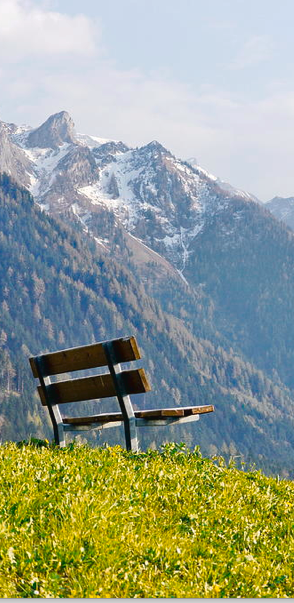
A universal aliveness moment

A universal aliveness moment

A universal aliveness moment
 A universal
aliveness moment
A universal aliveness moment
 A universal
aliveness moment
A universal aliveness moment
A universal aliveness moment
A universal
aliveness moment
A universal aliveness moment
A universal aliveness moment
A universal aliveness moment
A universal aliveness moment
A universal aliveness moment
A universal
aliveness moment
A universal aliveness moment
A universal
aliveness moment
A universal aliveness moment
A universal aliveness moment
|
||
|
|
